

Quick Summary
Mixing coastal decor with dark wood furniture works best when you let one dark piece anchor the room and balance it with light textiles, pale blue and sandy neutral colors, and layered warm lighting. Keep the walls light so the dark pieces feel intentional.
- Use the 60-30-10 idea: light tones for about 60% of the room, mid-tones 30%, dark wood or accents 10%.
- Extend a light rug at least 6 inches beyond the sofa and coffee table legs.
- Use 2700K to 3000K bulbs, since cooler light can make dark wood look gray.
- Leave at least 18 inches of walking space between the coffee table and sofa.
- Hang art so its center sits roughly 57 to 60 inches from the floor.
Table of Contents
- How Do You Mix Coastal Decor with Dark Wood Furniture?
- Design Principles for Balancing Dark Wood and Coastal Colors
- How to Lighten a Room with Dark Furniture Using Textiles and Lighting
- Styling a Coastal Living Room with Dark Furniture
- Creating a Coastal Bedroom with Dark Wood Furniture
- Your Coastal Decor Checklist: Start Mixing This Weekend
- Frequently Asked Questions
How Do You Mix Coastal Decor with Dark Wood Furniture?
Last Updated: November 26, 2026
Dark wood furniture and coastal decor can look like opposites, but they work well together. Light textiles, pale colors and beach-inspired accents can help blend the two. The trick is balance: let the dark pieces anchor the room while lighter elements keep it airy.
Dark wood is heavy by nature. Pale blues, sandy neutrals and soft greens lift a room and make it feel open, like the shore on a clear day. Mixing them takes a little planning, but the result feels relaxed rather than themed.
Start with a Room-by-Room Plan
Before buying anything, decide what each room needs. Walk through your home and note the dark pieces you already own.
- Living room: Pick one large dark piece as the anchor, such as a coffee table or sofa frame.
- Bedroom: Use light bedding over a dark headboard or nightstand.
- Dining area: Pair a dark table with pale chairs or a light runner.
- Entryway: Add one bright accent, like a coastal lamp or wall shelf.
Working room by room keeps your budget focused. You can see exactly where each coastal piece belongs.
Design Principles for Balancing Dark Wood and Coastal Colors
A few simple rules keep dark wood and coastal style in harmony.
- Follow the 60-30-10 idea. Use light tones for about 60% of the room, mid-tones for 30%, and dark wood or accents for the last 10%.
- Repeat colors. If your pillow has pale blue, add a touch of it to a vase or a print.
- Mix textures. Pair smooth painted wood with woven rugs and soft linen.
- Keep the scale in check. One large dark piece works better than several small ones competing for attention.
Common mistakes are easy to avoid. Too many dark pieces make a room feel gloomy. Too many light items can feel flat. Aim for contrast, not chaos.
Pale Blues, Greens and Sandy Neutrals
Pale blues and soft greens are the safest colors to pair with dark wood. They echo water, sea grass and sand without feeling overly themed.
Sandy neutrals such as warm beige and driftwood gray add warmth. They soften the contrast between dark wood and bright white walls.
Try this palette:
- Walls: soft white or pale sand
- Textiles: pale blue and seafoam
- Wood accents: natural or painted driftwood
- Metal accents: brushed brass or nickel
How to Lighten a Room with Dark Furniture Using Textiles and Lighting
Textiles and lighting do most of the work when you want a dark room to feel brighter. You do not need to replace your furniture.
Textiles that help:
- Light linen or cotton curtains that let daylight through. Hang them close to the ceiling and extend the rod a few inches past the window frame so more glass is exposed.
- Throw pillows in pale blue, white or sand. Choose covers with a visible weave such as slubby linen or cotton canvas; flat, shiny fabrics reflect less light and can look thin next to heavy wood.
- A light woven rug under a dark coffee table. Look for jute, sisal, or a flat-weave cotton in ivory or sand. The rug should extend at least 6 inches beyond the table on all sides so the dark piece appears to float.
- Soft, textured throws on a dark sofa. A chunky knit or waffle-weave throw in cream breaks up a large dark surface without hiding it.
Lighting that helps:
- Warm bulbs in lamps placed at different heights. A common pattern is to use 2700K to 3000K bulbs in living spaces; cooler bulbs can make dark wood look gray or clinical. Spread light across three levels: overhead, table or floor lamps, and low accent lighting such as a shelf lamp or candle.
- A pale or woven lampshade that glows softly. An opaque dark shade concentrates light downward and leaves the upper part of the room dim; a linen or paper shade diffuses light in all directions.
- Wall sconces that brighten dark corners. Corners are where heavy furniture reads as gloomiest, so a pair of sconces flanking a dark bookcase or cabinet can lift the whole wall.
Layering light sources matters more than the brightness of any one lamp. Place a lamp on each side of the room to spread light evenly.
Watch out: placing a single bright lamp directly beside a dark wood piece can create harsh shadows that make the furniture look heavier, not lighter. Use two or three softer sources instead.
For budget-friendly options, a guide to choosing coastal throw pillows can help you pick fabrics and sizes that suit dark furniture. For a quick lift, a linen table lamp adds soft, warm light and a coastal feel without any installation.
Styling a Coastal Living Room with Dark Furniture
Start with the largest dark piece, usually the sofa or coffee table, and build the room around it.
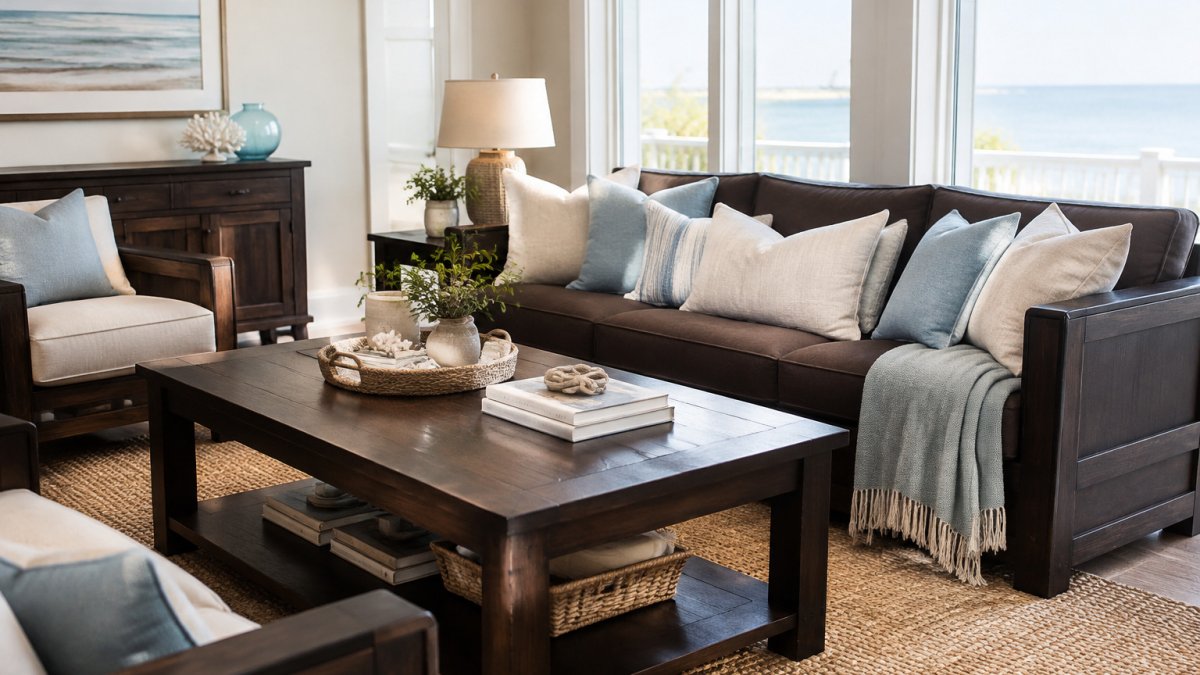
Step 1: Ground the space with a light rug. Choose a rug in ivory, sand, or pale gray that extends at least 6 inches beyond the front legs of the sofa and the coffee table. A coastal rug guide can help you match the size and color to your dark furniture. If the room is small, a rug that leaves a border of bare floor around the edges makes the space feel larger than wall-to-wall carpet.
Step 2: Layer the seating. Add pale pillows, a soft throw and a few beach-inspired accents such as a shell dish or a glass vase.
Step 3: Balance scale and proportion. A large dark coffee table can overwhelm a small sofa.
Step 4: Keep the walls light. This gives the dark furniture a clean backdrop and keeps the room from feeling heavy.
Watch out: filling every surface with small accessories can make a dark room feel busier and heavier.
Each step for styling a coastal living room with dark furniture comes with a clear target, so you can check your progress as you go.
| Step | What to do | Key measure |
|---|---|---|
| 1. Ground the space | Choose a light rug in ivory, sand or pale gray | Extend 6 inches beyond sofa and table legs |
| 2. Layer the seating | Add pale pillows, a soft throw and beach accents | Use three or five pillows, varied sizes |
| 3. Balance scale | Break up an oversized dark coffee table | Table wider than two-thirds of sofa needs a runner or stools |
| 4. Keep walls light | Hang one or two blue or green framed prints | Art centre at 57 to 60 inches from floor |
| 5. Add open space | Leave walking room between table and sofa | At least 18 inches |
Creating a Coastal Bedroom with Dark Wood Furniture
A dark bed frame or nightstand can look striking in a coastal bedroom when the bedding stays light.
Use white or pale blue bedding over a dark headboard. Add a textured throw at the foot of the bed for warmth. Sheer curtains in sand or seafoam let in morning light and soften the room.
Your coastal throw pillows and bedding can carry the palette through the room. Choose pillows in two or three shades from the same family for a calm, cohesive look.
For a deeper look at room ideas, see this beach inspired bedroom decor guide.
Your Coastal Decor Checklist: Start Mixing This Weekend
Use this checklist to plan your coastal update with dark wood furniture:
- Choose one dark anchor piece per room
- Pick a palette of two or three pale coastal colors
- Add light curtains or sheer panels
- Place a light or woven rug under dark furniture
- Layer pale pillows and a soft throw
- Add warm lamps at different heights
- Include one or two beach-inspired accents, like shells or a glass vase
- Hang a framed print in blue or green tones
Start with one room this weekend. Once you see how the light and colors work with your dark wood, the rest of the house will follow more easily. For wall decor ideas, the modern abstract art canvas and shelf wall mount are simple places to begin.
Frequently Asked Questions
What color goes well with dark wood furniture?
Pale blues, soft greens, sandy neutrals and warm whites all work well with dark wood. Pale blue and sea-glass green bring a coastal feel without competing with the furniture, while off-white and cream linen keep the room from looking heavy. Start with one light base color on the walls or large textiles, then add one or two accent colors from the same family so the palette stays calm and cohesive.
How can you lighten a room with dark furniture?
Add light-colored pillows, curtains and throws in linen or cotton, choose a light or pale rug to brighten the floor, and layer in a table lamp with a warm white light so the room is not lit only from above. Keeping walls light and reflective, and placing mirrors or light-toned accessories opposite windows, also helps offset the weight of dark wood and makes the space feel open.
Can dark wood furniture work in a coastal-style room?
Yes. Dark wood adds grounding contrast that many coastal rooms lack when everything is pale. The key is balance: pair dark pieces with light walls, airy fabrics and beach-inspired accents such as shells, driftwood-toned vases or a painted wood shelf. Mixing a painted or lighter wood piece with the darker furniture also creates a relaxed, layered look instead of a heavy one.
What fabrics and textures create a coastal look?
Linen, cotton, woven jute and soft knit throws give a relaxed coastal feel and pair naturally with dark wood. Layer several textures in the same light palette, such as a linen sofa cover, a woven rug and a knit throw, so the room feels warm and inviting rather than flat. Avoid glossy or heavy fabrics, which can make dark furniture look more dominant.
