

Quick Summary
The best coastal rugs for a living room are sized so the front legs of your sofa and chairs rest on them, which keeps the seating group connected. Natural fibers like jute, sisal and seagrass suit a relaxed beach mood, while a stain-resistant synthetic option works better in busy homes.
- Measure your seating area first and let the front legs of sofa and chairs rest on the rug.
- Avoid a rug that sits only under the coffee table, since it can look like an afterthought.
- Blot spills on natural fibers immediately and avoid soaking jute or sisal in humid air.
- Choose a rug pad matched to the fiber and floor, since rubber can trap moisture under natural fibers.
- Pull colors from the rug into pillows and throws, mixing one textured cover with one smooth one.
Table of Contents
- Start With the Right Size for Your Living Room
- Pick Materials That Suit Coastal Style and Daily Use
- Match Color and Texture to a Modern Coastal Room
- Style Your Coastal Rug With Pillows, Pads and Existing Decor
- Choose Your Coastal Rug and Set Up the Room
- Frequently Asked Questions
How to Choose Coastal Rugs for Your Living Room
Last Updated: November 4, 2026
Start With the Right Size for Your Living Room
Choosing a coastal rug starts with size, and getting it wrong is a common mistake. A rug that is too small makes the room look unfinished, while one that is too large can crowd a modest space. At Print Wave Store, we suggest measuring your seating area before you browse anything.
The general rule: the front legs of your sofa and chairs should rest on the rug. This keeps the seating group connected and gives the room a settled look. A rug that sits only under the coffee table tends to look like an afterthought.
Pick the rug size that matches your layout:
| Room Layout | Typical Rug Approach | What to Avoid |
|---|---|---|
| Sofa and two chairs | Large rug, front legs on the rug | Rug that sits only under the coffee table |
| Compact apartment | Mid-size rug under the seating group | Oversized rug that crowds walkways |
| Open-plan space | Rug to anchor one zone | Matching rug size to every zone |
Leaving some bare floor around the edges can make the room feel larger. If you rent and plan to move, measure the new space too, since a rug that works in one room may not suit the next.
Pick Materials That Suit Coastal Style and Daily Use
The material of your rug affects how it looks, how it feels underfoot and how well it handles daily wear. Coastal style leans toward natural textures, so most shoppers start with natural fibers. Synthetic options deserve a fair look too, especially in busy homes with kids, pets or both.
Natural fibers versus synthetic options
Natural fibers such as jute, sisal and seagrass give a relaxed, weathered look that suits a beach house mood. They have a warm, textured surface and work well with a neutral palette, but they can feel rough and stain more easily when liquid soaks in.
Synthetic rugs are another option to consider, especially in busy homes. Check the sample in person or in a clear photo before you buy.
A useful way to decide is to ask how you use the room. A formal sitting room with light traffic suits a natural fiber. A family room with kids and pets usually calls for something easier to clean. If you want the natural look without the maintenance, a jute-look polypropylene weave is a common compromise.
Durability and high-traffic considerations
High-traffic areas wear rugs down faster than you might expect, so it helps to consider the weave and pile density when you choose.
Check the care instructions before you order. Check the care instructions before you order, since some rugs are washable and others are not. For natural fibers, blot spills immediately rather than rubbing, and avoid soaking jute or sisal, which can warp and grow mildew in humid coastal air.
Pet- and kid-friendly choices
Families with kids and pets may want to look for rugs labeled stain-resistant or machine-washable, and check the backing and adhesive before buying.
Sustainability and eco-friendly materials
If sustainability matters to you, it is worth asking about the materials and any third-party certifications behind them.
Match Color and Texture to a Modern Coastal Room
Coastal style does not have to mean nautical stripes and anchors. A modern coastal room works well with restrained color and layered texture. Sand-toned, coastal gray and soft blue-and-white palettes all sit comfortably in contemporary spaces.
Start with the rest of your room. If your sofa and walls are neutral, a rug with blue or sea-salt tones adds color without overwhelming the space. If your room already has bold accents, choose a rug with quieter tones so the pieces do not compete.
Many people wonder whether coastal decor will look too beachy in a modern apartment. The answer depends on restraint: a single striking coastal piece usually reads as considered rather than themed.
Sandy Toes Salty Kisses Square Pillow →
Style Your Coastal Rug With Pillows, Pads and Existing Decor
A rug looks its best when the pieces around it work together. Pillows, a rug pad and your existing furniture all shape the final result, and the order you layer them in matters more than most guides admit.
Start with a rug pad, not the pillows
A rug pad can help keep a rug in place and lying flat. Choose a pad suited to your floor type and trim it so it sits just inside the rug edge.

Watch out: a non-breathable rubber pad under a natural-fiber rug in a humid room can trap moisture and cause mildew on the underside, so match the pad to the fiber and the floor.
Layer pillows and throws to tie the rug in
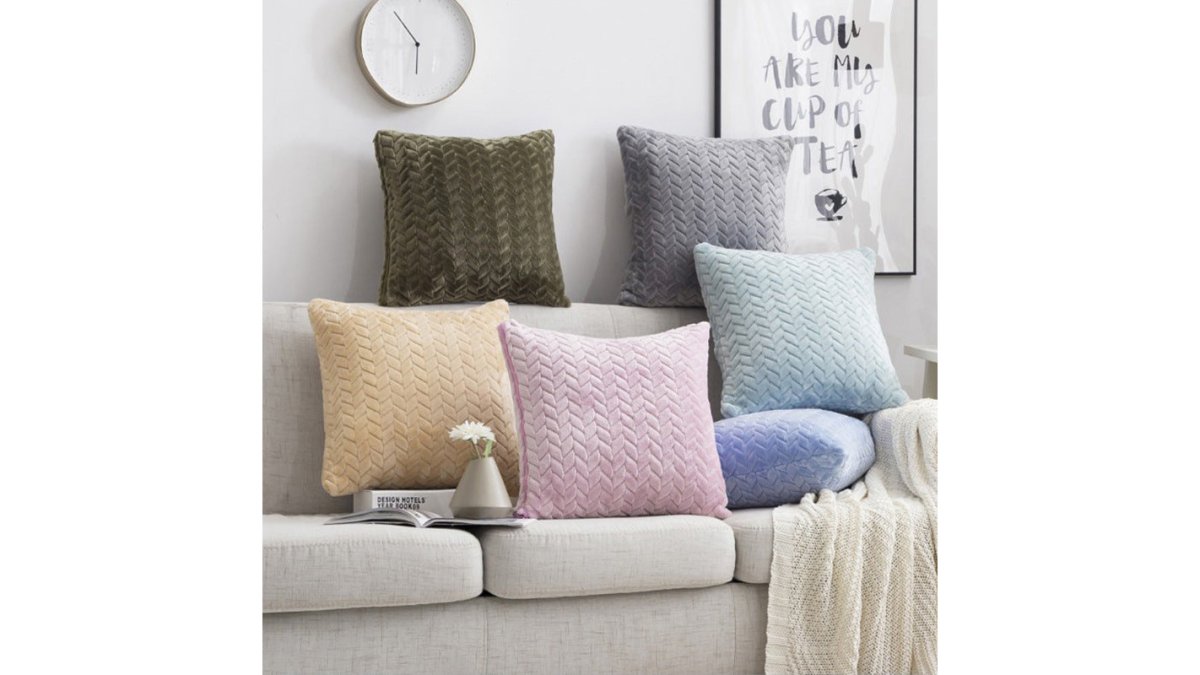
Throw pillows are the quickest way to tie a rug into the room. Choose colors pulled from the rug, then add one contrasting shade for interest. Work in odd numbers and vary the size: a 20-inch square at each end of the sofa, an 18-inch square in the middle, and a smaller lumbar in front. Mix one textured cover (linen, boucle or chunky knit) with one smooth one so the grouping does not look flat.
Our Sandy Toes Salty Kisses Square Pillow ($22.00) is a coastal throw pillow with a printed design, available in four sizes from 14 to 20 inches, with a concealed zipper. Our Love you to the Beach and Back Cushion ($18.00) is another coastal accent option.
A throw draped over one arm of the sofa, in a tone pulled from the rug, does more to connect the seating group than a second matching pillow would.
Transition existing decor to a coastal look
You do not need to replace your furniture to make a coastal rug work. Keep the large neutral pieces (sofa, coffee table, media console) and let the rug and a few accents carry the coastal note. If your existing decor leans modern, add one or two coastal accents rather than replacing everything: a woven basket, a linen throw, a piece of driftwood or a canvas print. Wooden furniture, woven baskets and natural linens all complement coastal rugs, so lean on what you already own.
A useful test is to photograph the room from the doorway before and after adding the rug. If the rug reads as the loudest thing in the frame, pull back the surrounding accents rather than returning the rug. If the room still feels flat, add texture (a knit throw, a rattan tray) before adding more color.
Keep patterns and textures in balance
Texture matters as much as color. Pair a smooth woven rug with a chunky knit throw, or a tufted rug with a linen cushion. This contrast gives the room depth. For a more polished result, keep the number of patterns to two or three at most, and repeat one color from the rug in at least two other places in the room so the palette feels intentional rather than accidental.
Choose Your Coastal Rug and Set Up the Room
Once you have chosen your rug, set up the room in a simple order. Place the rug first, check that the seating sits on it, then add the pillows and rug pad. Step back and look at the room from the doorway. Small adjustments often make the biggest difference.
If you want to finish the room, a canvas print can anchor a wall above the sofa.
A coastal living room should feel calm and personal. Take your time, measure carefully and choose pieces you would enjoy looking at every day. Shop Now at Print Wave Store to find coastal rugs, pillows and wall art for your living room.
Frequently Asked Questions
What is the 70% rule for rugs?
The 70% rule suggests a rug should cover about 70% of the floor area of the room or seating group it sits in. In a living room, that usually means the front legs of the sofa and chairs rest on the rug, with the rug extending well beyond the furniture on the sides. For a coastal living room, this keeps the space feeling anchored and balanced. Measure your seating area before you buy, then compare the rug dimensions against it to confirm the coverage.
Are jute and sisal rugs good for coastal living rooms?
Jute and sisal are natural fibers often associated with coastal style because of their woven, sun-bleached look. They suit relaxed, airy rooms well.
Should a coastal rug be lighter or darker than the living room sofa?
A coastal rug usually works best when it is lighter than the sofa, such as sand, coastal gray or soft white, which keeps the room bright and open. A darker sofa can be balanced with a lighter rug, while a light sofa can be grounded with a slightly deeper tone or a subtle stripe. Choose a color that complements the walls and the rest of your palette instead of matching it exactly.
How do I choose the right size rug for a coastal living room?
Start by measuring your seating area. For a standard sofa and two chairs, an 8x10 rug is a common choice that lets the front legs of all furniture rest on it. Smaller rooms may suit a 5x8 rug, while larger sectionals may need a bigger size. Use the 70% rule as your guide before purchasing.
